 Call Us : 07971189246Call Us : 07971189246

 Send Inquiry
Concrete Hume Pipes
Price 500 INR/ Unit
MOQ : 100 Units
Concrete Hume Pipes Specification
- Flexibility
- Rigid
- Diameter
- 300 mm to 1200 mm
- Connection Type
- Collar Joint/Spigot and Socket
- Bend Radius
- Rigid (no bend capacity)
- Coating Type
- None (plain RCC)
- Tolerance
- 5 mm
- Temperature Range
- -10C to 60C
- Sealing Type
- Rubber Gasket or Cement Mortar
- Tensile Strength
- As per IS 458: 2003, typically 3.0 MPa to 4.5 MPa
- Product Type
- Other
- Material
- Other
- Connection
- Spigot and Socket Joint
- Shape
- Cylindrical
- Standard
- IS 458:2003
- Surface Treatment
- Smooth Cement Finish
- Outer Diameter
- 300 mm - 1200 mm
- Section Shape
- Round
- Length
- 2.5 m (standard)
- Thickness
- 150 Millimeter (mm)
- Color
- Grey
- Usage
- Drainage, Sewerage, Storm Water
- Rated Pressure
- 2.5 to 6 kg/cm2
- Material Grade
- M35 or M40 concrete
- Application
- Underground Piping, Culverts, Irrigation Channels
- Chemical Resistance
- Good, resistant to mild acids and alkalis
- Installation Method
- Manual or Mechanical Placement
- Class
- NP2, NP3, NP4
- Fire Resistance
- Excellent
- Maintenance
- Low
- Water Tightness
- Tested as per IS 458
- Inner Diameter Range
- 80 mm to 2300 mm
- Life Span
- 50+ Years (under standard conditions)
- End Type
- Collared
- Joint Type
- Spigot & Socket Joint/Flexible Joint
- Load Bearing Capacity
- Designed as per IS standards for traffic and soil loading
Concrete Hume Pipes Trade Information
- Minimum Order Quantity
- 100 Units
- Payment Terms
- Cash Advance (CA)
- Delivery Time
- 7 Days
- Main Domestic Market
- Gujarat, Madhya Pradesh, Maharashtra, Rajasthan
About Concrete Hume Pipes
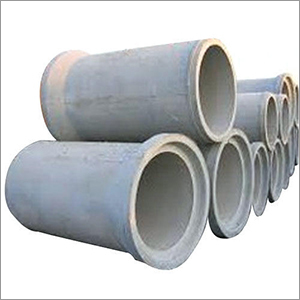
Leveraging on our latest infrastructure facilities, we are able to offer Concrete Hume Pipes. These pipes are generally required for water drainage, sewerage, culverts and irrigation. In order to meet maximum clients' satisfaction, Concrete Hume Pipes are quality checked on various parameters set by the industry. Not only this, our pipes are completely leak proof, are easily repairable and are non-reactive to sewerage toxins.
Engineered Durability and Strength
These concrete Hume pipes utilize mild steel bars as reinforcement, ensuring remarkable structural integrity even under heavy external loads. Manufactured in compliance with IS 458:2003 and meeting M35/M40 concrete grades, they withstand compressive stresses above 35 MPa, providing high load-bearing capability (NP2, NP3, NP4 classes). Their exceptional durability makes them ideal for diverse underground applications across India.
Customizable for Project Needs
Available in a wide range of diameters (250 mm to 1200 mm) and a standard length of 2.5 meters, these pipes can be produced to fit unique project demands. The flexibility to select various sizes, thicknesses, and load classes ensures compatibility with drainage, sewerage, storm water, and irrigation infrastructures. High weather resistance enhances their suitability for harsh climates and challenging installation environments.
Reliable, Watertight Jointing
A choice between rubber gasket and cement mortar slurry joints offers reliable connections to prevent leakage. The spigot and socket/collar joints are designed for simple yet secure installation, contributing to efficient pipeline assembly. With a leakage test pressure of 0.7 kg/cm2, these pipes guarantee watertight performance-critical for underground water and sewer conveyance.
FAQ's of Concrete Hume Pipes:
Q: How are the concrete Hume pipes installed and joined securely?
A: These pipes are laid in a horizontal position and connected through spigot and socket or collar joints, using either rubber rings for flexibility and water-tightness or cement mortar slurry for a rigid, permanent seal. The standardized length of 2.5 meters facilitates efficient handling and installation on site.Q: What are the typical usage scenarios for these reinforced Hume pipes?
A: Commonly utilized for underground drainage, sewerage, storm water management, culverts, and irrigation channels, these pipes are engineered for applications demanding high strength, weather resistance, and long-term reliability under varying load and environmental conditions.Q: When should I opt for NP2, NP3, or NP4 load bearing classes?
A: The load-bearing class should be selected based on the project's structural requirements. NP2 is suitable for low-load applications such as small drainage, NP3 is for general purpose medium loads, while NP4 is recommended where heavy loading or high traffic/cover is expected, such as mainline sewerage or roads.Q: Where can these concrete pipes be implemented?
A: These pipes are designed for a variety of underground applications across India, including municipal and rural drainage systems, highways, culverts, industrial complexes, irrigation channels, and storm water management projects.Q: What is the manufacturing process of these pipes?
A: Concrete Hume pipes are produced using either centrifugal spinning or vibration casting. Both methods ensure uniform compaction of concrete around the mild steel reinforcement, resulting in consistent cylindrical shape, smooth finish, and high structural integrity.Q: What benefits do reinforced concrete Hume pipes provide over alternative materials?
A: These pipes offer superior load-bearing capacity, extended lifespan, high resistance to weathering, and low maintenance compared to alternatives. Their rigid structure, watertight joints, and customization make them particularly advantageous for challenging underground and high-load environments.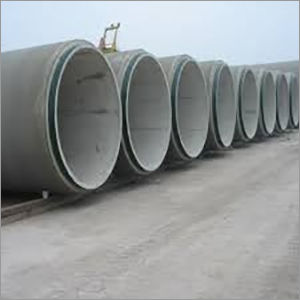
Tell us about your requirement

Price:
Quantity
Select Unit
- 50
- 100
- 200
- 250
- 500
- 1000+
Additional detail
Mobile number
Email

More Products in Concrete Pipes Category
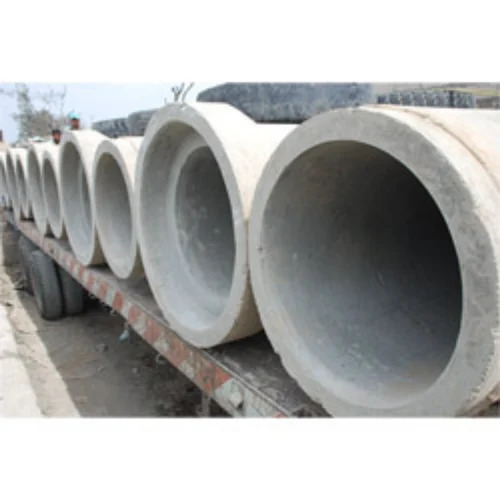
RCC 150 mm to 1800 mm Concrete Pipe
Price 160 INR / Meter
Minimum Order Quantity : 100
Product Type : Other, RCC Hume pipe
Material : Other , RCC
Color : Grey
Shape : Round
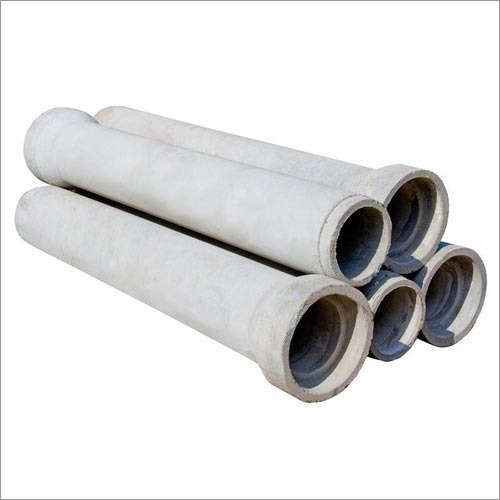
RCC Spigot Pipes
Price 500 INR / Piece
Minimum Order Quantity : 100 Pieces
Product Type : Other, RCC Spigot Pipe
Material : Other
Color : Grey
Shape : Other, Cylindrical
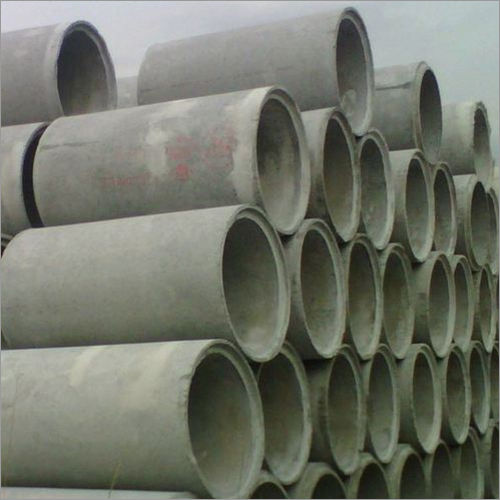
Concrete Spun Pipe
Price 500 INR / Piece
Minimum Order Quantity : 100 Pieces
Product Type : Other, Spun Pipe
Material : Other
Color : Grey
Shape : Other, Cylindrical
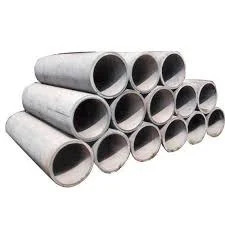
Concrete Spun Pipe
Price 350 INR / Meter
Minimum Order Quantity : 50
Product Type : Other, rcc pipe /spun pipe /hume pipe
Material : Other , rcc
Color : grey
Shape : Round

We deal only in bulk orders.
Address
GUJARAT SPUN PIPE FACTORY
GST : 24ADOPP3444L1Z5
GST : 24ADOPP3444L1Z5
- Village. - Dhokaliya, Sankheda Taluka, Vadodara District, National Highway 953, Bodeli - 391135, Gujarat, India
- Phone :07971189246
- Send Inquiry
- Mr. Jaymin V Patel (Manager)
Mobile : 09725109949 , 09825319883
 Send Inquiry
 Send Inquiry
 Send SMS
 |
GUJARAT SPUN PIPE FACTORY
All Rights Reserved.(Terms of Use) Developed and Managed by Infocom Network Private Limited. |
